
Panels
Monocrystalline modules turn the roof into the generator. Everything downstream is sized from what they make.
- System losses assumed14%
- Typical residential array8 kW DC
- Sizing modelNREL PVWatts
Full home energy independence
Panels, storage, inversion, heating and car charging designed as one system. Sized on public data, not on optimism.
From $3.15 per watt installed, the modelled market price for residential solar, NREL 2024.

In daylight the roof feeds the house and the car, and the surplus fills the battery.
Each part is useful alone. Together they take the house off the meter: daylight, night, winter and the car.
Monocrystalline modules turn the roof into the generator. Everything downstream is sized from what they make.

Lithium iron phosphate cells hold the afternoon so the evening can spend it. Without storage a solar house is still a grid house after dark.
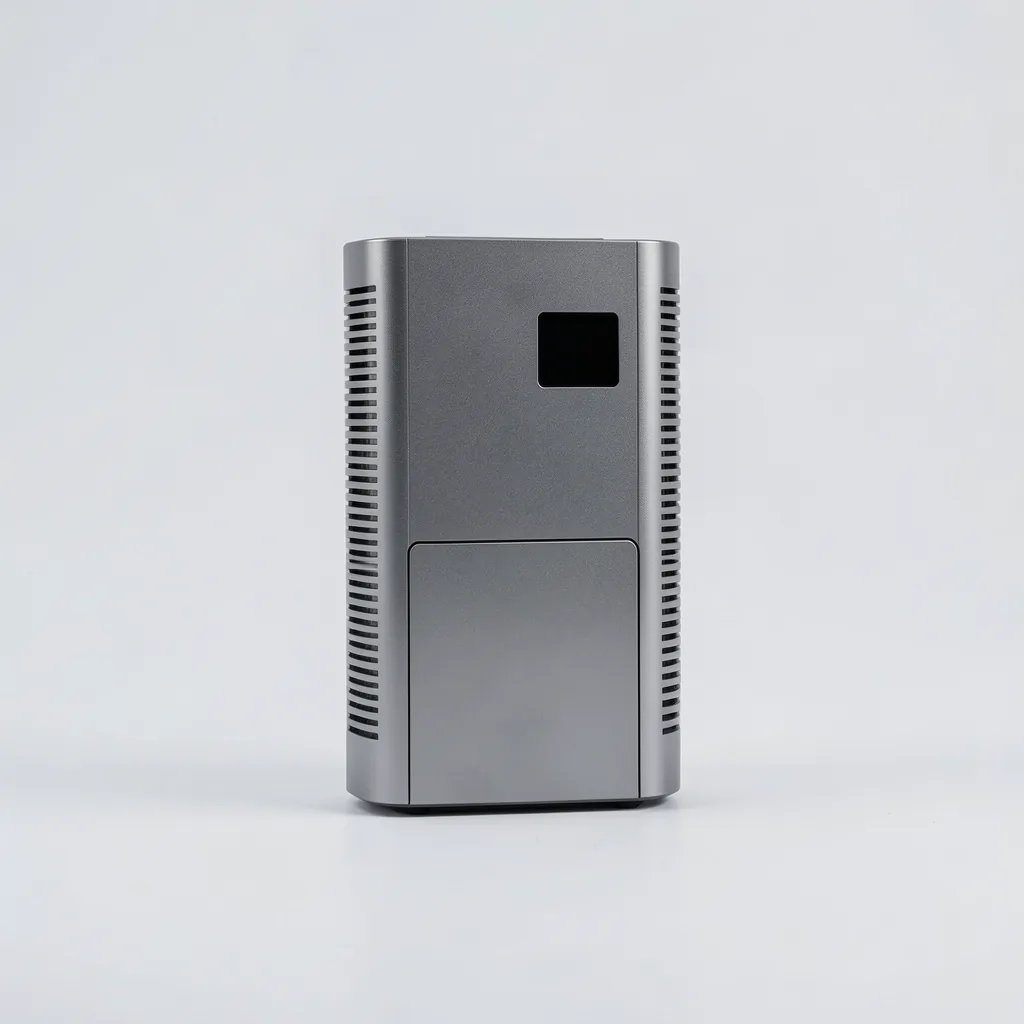
The hybrid inverter is the decision maker. Every second it chooses between the roof, the battery and the grid.

The car is usually the largest single load in a solar home, and the easiest one to move into the middle of the day.

Heat pumps and electric convectors move heating onto the same roof. Anything still burning fuel is a hole in the autonomy.
Complete systems first, because that is how solar is actually priced. Individual equipment below, with the specification each unit is built to.




System prices are the array size multiplied by $3.15 per watt DC, the NREL modelled market price for the first quarter of 2024, in 2023 dollars. That figure already contains labour, permits and commissioning, which is why individual units carry no separate price. The storage figure uses $283 per kWh DC from NREL ATB 2024 and covers cells only. Annual yield is calculated at 4.5 peak sun hours and 14% losses. Capacities and array sizes are the representative values from those publications; the exact modules for your roof are fixed at survey.

A car is the one load you can move. Charge it while the sun is up and it costs you production you would otherwise export for pennies.
The charger sits on the wall next to the car and talks to the inverter. When the roof makes more than the house needs, the surplus goes into the car instead of into the meter.
Most estimates size the roof for the house and add the car afterwards, which is how people end up with an array that never covers the driving. Put your kilometres into the calculator and the array grows to match.
The equipment is the easy half. What decides whether a solar house still works in twenty years is who mounts it and who comes back to check it.
Our own crew, not a subcontractor found for the week. Rails first, then modules, then the electrical work, then commissioning with the readings written down and handed to you.
One visit a year: panel surfaces and fixings, inverter behaviour, battery cells and firmware, and a comparison of what the system actually produced against what it was sized to produce.
We read your last twelve bills and look at the roof, its pitch and what shades it through the year.
Array, storage and charger sized on your consumption, with the arithmetic shown to you rather than hidden.
Rails, modules, inverter, storage and charger fitted and commissioned by our own crew.
One visit a year, with production compared against the estimate you were given at the start.
Calculator
The same arithmetic a good installer runs. Defaults are United States national averages, so change them for your own house.
865 kWh was the United States average in 2024 (EIA). Your own last bill is a better number than this one.
Counted at 0.20 kWh per kilometre, the middle of the DOE range.
This depends entirely on where you live. Look yours up on PVWatts. We will not guess it for you.
16.5 cents was the United States residential average in 2024 (EIA). Hawaii and Connecticut are roughly double New Mexico and Utah.
Closest catalogue system: SOLARA Roof 8
Price at $3.15 per watt DC, the NREL modelled market price for the first quarter of 2024, in 2023 dollars. Losses of 14% per PVWatts. No subsidy is included, see below. Simple payback ignores inflation, tariff changes and maintenance.
Read this before you buy
An average United States house uses 10,380 kWh a year. Covering that takes roughly an 8 kW array, which costs about $25,200 at the modelled market price and replaces about $1,713 of electricity a year. That is a payback near 14.7 years, not the seven that solar pages like to print.
The 30% federal Residential Clean Energy Credit does not apply to equipment placed in service after 31 December 2025, so this page shows no subsidy at all. Published sources disagree about what replaces it. Check the current text on irs.gov before counting on anything.
Every number on this page comes from a United States government laboratory or agency and is listed below with its source. Where we have no verified number, which includes exact module ratings, brand prices, European tariffs and European subsidies, this page says nothing rather than inventing it.

Public data, named and linked. If a figure is not here, it is not on this page.
| Quantity | Value | Source |
|---|---|---|
| System losses | 14% | NREL, PVWatts V5 Manual |
| Typical residential array | 8 kW DC | NREL and DOE Cost Benchmark, Q1 2024 |
| Modelled market price | $3.15 / W DC | NREL and DOE Cost Benchmark, Q1 2024 |
| Minimum sustainable price | $2.74 / W DC | NREL and DOE Cost Benchmark, Q1 2024 |
| Battery pack cost | $283 / kWh DC | NREL ATB 2024, figure for 2022 |
| Representative storage | 5 kW / 12.5 kWh | NREL ATB 2024 |
| Storage chemistry | LFP | NREL ATB 2024 |
| Household consumption | 865 kWh / month | EIA, 2024 |
| Residential electricity price | 16.5 cents / kWh | EIA, 2024 |
| Electric vehicle consumption | 25 to 40 kWh / 100 mi | US DOE, fueleconomy.gov |
| Federal tax credit | Not available after 31 December 2025 | IRS |
Costs are in 2023 dollars and have not been adjusted for inflation. All figures describe the United States market. European prices, tariffs and incentives are different and are not covered here.
Send your last twelve electricity bills and your postcode. You get the array size, the production estimate and the price, with the source of every figure.